
My name is Hannah.
I am a writer, facilitator & former therapist.
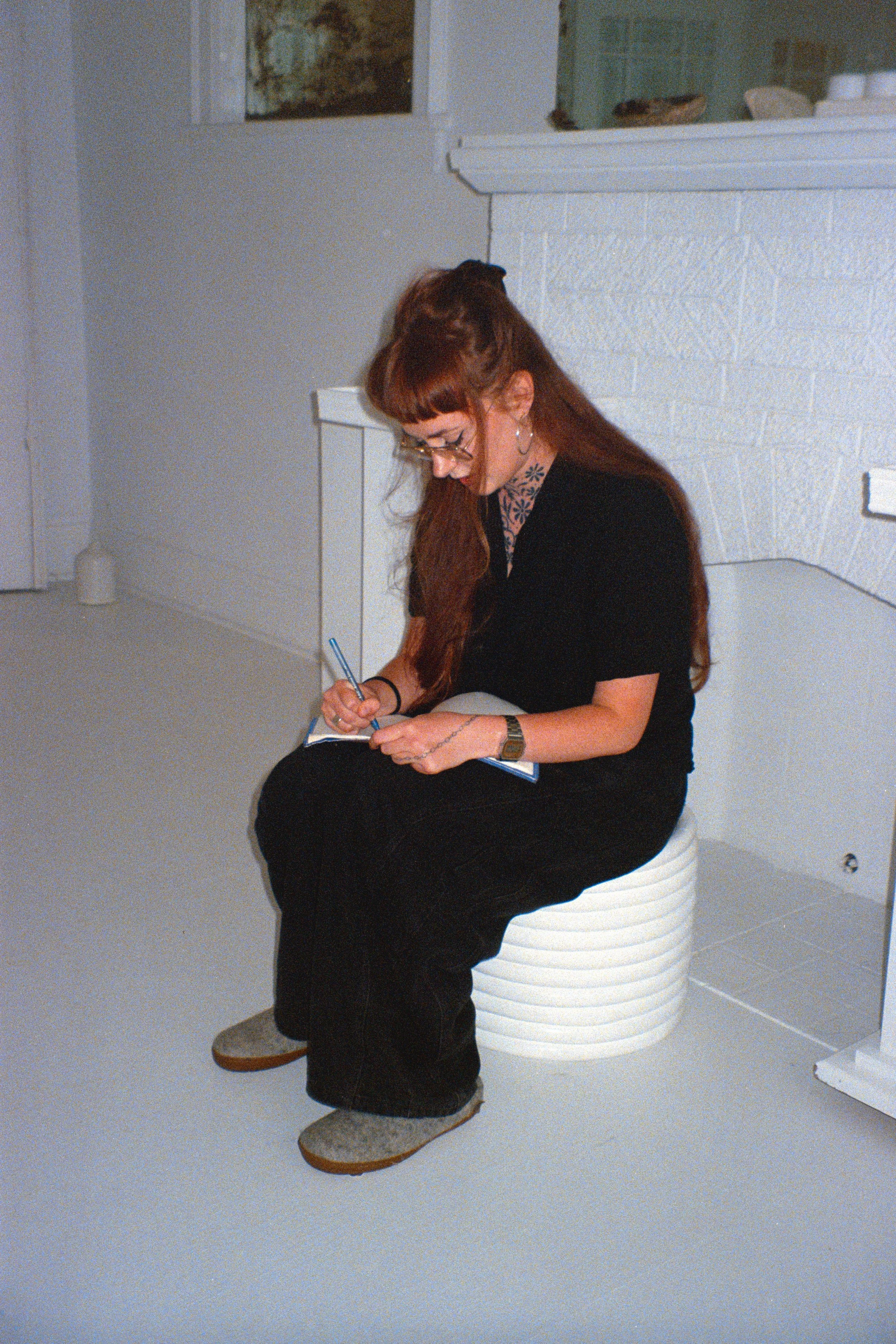
I left my work in the system to pursue my own recovery. Then I came back. But different. With new ideas surrounding what I believe supports repair, expansion and healing.
My practice currently focuses on psychospiritual and somatic care through community-based breathwork, meditation and writing groups.
My Story
I began my career deeply embedded within the system as a therapist working with women fleeing domestic violence. Many of my clients were at high-risk for homicide. The women arrived to our work from many different social locations — some lived in shelters while others had lived their entire lives in affluence, only to find themselves exploited by financial abuse and divorce proceedings.
I was drawn to the sector because I loved working with women, and I wanted to support others in getting free.
Of course, there are the obvious freedoms. The right to stay, or leave a relationship. Financial independence. The right to make one’s own decisions. But I soon learned there are deeper levels of freedom — there are places inside where we may not even realize our freedom is impaired. Places where we are controlled by our wounds, addictions, intergenerational patterns, fears, limiting beliefs.
In 2023, I experienced what I sometimes refer to as a “personal apocalypse”. All was turning to ash. It felt like the scene in an action movie where everything is exploding in slow motion, shards of glass flying all around — except everyone around me carried on as normal, unaffected. I felt way, way, too young to be going through any of it. None of my friends had any personal reference point for this specific kind of trauma I was experiencing. Not only did the isolation of the experience feel life-ending, but I also felt entirely lost as to what to do. My nervous system was shot. I felt “normal”, calm and “like myself” around no one. Actually, I didn’t even know who that was anymore…
During this time, I constantly had a mental of image of a cartoonishly giant hand — God — picking me up by the back of my tee-shirt and placing me on the edge of a cliff. My task? Learn how to climb back up.
And so I tried. I wondered if I was being punished. I wondered why all of it was happening. And I did everything I could to get back up off that cliff. To get control over my life, and over my anxiety. I dug my nails deeper into that rock until everything was sore; by that I mean, I did my best to “heal”.
Despite my efforts at talk therapy, at SSRIs, at distraction, at “self-help”, at podcasts, at numbing — for two years, I did not sleep for over three hours straight.
My anxiety was constant, severe and profoundly impacting my quality of life. I felt unable to connect with others while in such a dysregulated state. When my beloved people were kind, or loving, or present, I didn’t feel it could truly reach me. On an intellectual level, I felt burdensome about my “never okay-ness”. On an emotional level, it was like I couldn’t make contact with any form of love. I oscillated from trying my best to “push through” the anxiety, to being honest about where I was at with others, to masking because I felt I had no other option, to complete and utter exhaustion from living in this state of being. At a certain point, I began wondering if I might have to live like this forever. And I was trying, God knows I was trying.
One day I saw a poster on a bulletin board in a local Japanese restaurant. It was an 8.5 by 11 inch print out that said “GROUP THERAPY” with a pink flamingo, and an email address. No other information was listed. I walked out of the restaurant and past it. Then I felt something in my stomach— a little butterfly of curiosity, or maybe it was hope—pay attention Hannah. You have to start paying attention to those glimmers, I thought. I walked back in, took a picture of the poster, went home and emailed the address listed. Thank goodness for our glimmers; the little internal sign posts that we could so easily overlook. It’s a long story but a strange form of group therapy, beside an old chocolate factory on Sterling Road in Toronto, changed my life. I learned that this specific kind of therapy was called “somatic therapy”, and that it existed within a larger umbrella of practices called “somatics”.
I didn’t know it, but I was addicted to controlling the way I experienced emotions. The addiction to control manifested through a fixation with self-soothing (some “healthy”, some not so healthy), constant rumination, an obsession with managing the external circumstances of my life and reassurance seeking behaviours. All of these were protective mechanisms I had developed to stop myself from experiencing emotion. On a physical level, when a big feeling came, I held my breath. I clenched my body. I felt ashamed. And often, I disassociated.
What I would begin learning through somatics is that letting go and falling into that vast ocean of emotion underneath me, would actually save my life. What did “letting go” mean? Letting go meant learning how to feel. It meant learning how to stop holding my breath when a feeling came. Learning how to unclench. Learning how to go towards the emotion, instead of away from it. Letting go meant beginning to build a tolerance for experiencing emotions in my body; developing practices that helped me open my emotional system by slowing down, by using my breath, and by remaining in myself. Letting go meant learning how to be free instead of being controlled by, well, control.
The group was the first container through which I began experience the sacred equation of Deep Feeling + Community = Aliveness. Over time, I would learn that groups could become a kind of laboratory through which we could try on new ways of being, and this in effect creates a reparative experience. Through somatic group, we “re-teach” our bodies how to feel while in relationship with others. The strangers with whom we share in the group become comrades in a larger project; the project of bringing more of one’s Self into the world.
I found many somatic guides along my way.
Some were ancient, traditional and structured, others were unconventional and experimental. I immersed myself into different forms of somatic work — Vipassana, breathwork, authentic relating, circling, radical aliveness, somatic experiencing, core energetics. And I began developing my own tools, strategies, and philosophies for nervous-system level healing, inspired what helped me. By what helped me learn how to fall really. Off that cliff, and into the truth of my experience. Off that cliff, and into my body. Off that cliff and into grief, despair, fear, aliveness, connection, creativity, expansion, play.
I came to think of somatics as a form of exposure therapy. The more that I learned how to feel emotion in my body, and how to stay in my body when emotion came, the more I was building an internal capacity to navigate near any life situation. I realized that underneath every fear was a fear of the sensation that the experience evoked in my body. Learning how to build tolerance and safety in experiencing these sensations meant I was building, in real time, a well of capacity. And the capacity was making me brave. Moreover, I believed it was allowing me to fully process and discharge my experiences. Soon, I started sleeping again. And my anxiety disappeared.
Today, I run my own groups.
While I don’t believe anything is for everyone, I do share what helped me, and I have seen it help others. I believe I am not the only person who was addicted to controlling my emotions, because no one had ever taught me how to move towards them instead of away; because my parents had also been educated out of their feelings; because talk therapy brought me out of my body; because SSRI’s numbed me; because we are all, on some level, subject to intense daily socialization out of our emotions, our instinct, our knowings. I believe — no, I know, there are so many others. I meet them every month in groups. It is a gigantic and unbelievable blessing to be in this shared project together, the project of learning how to feel again.
Hannah Ciordas is a writer & group facilitator. She is the creator of an online community of over 125k+ at Meeting Myself Again and Beinghood. Hannah is no longer in clinical practice, as her focus is on studying writing, somatics, spiritual care, breathwork and meditation.